Zydus Corporate Park
Morphogenesis
Short description
Introduction
The headquarters of pharmaceutical group Zydus is located in Ahmedabad, which has an extreme hot and arid climate (max 120°F). This building amalgamates technology and tradition to redefine global sustainability benchmarks. It is deeply rooted in the rich architectural heritage and crafts tradition of the local communities. The design takes cognizance of the fact that is situated in an UNESCO world heritage city that has simultaneously been a patron to Modern architecture and architects like Charles Correa, B. V. Doshi, Le Corbusier and Louis Kahn amongst other Modern Masters who have created noteworthy architecture here.
Contextual References and Sustainable Design
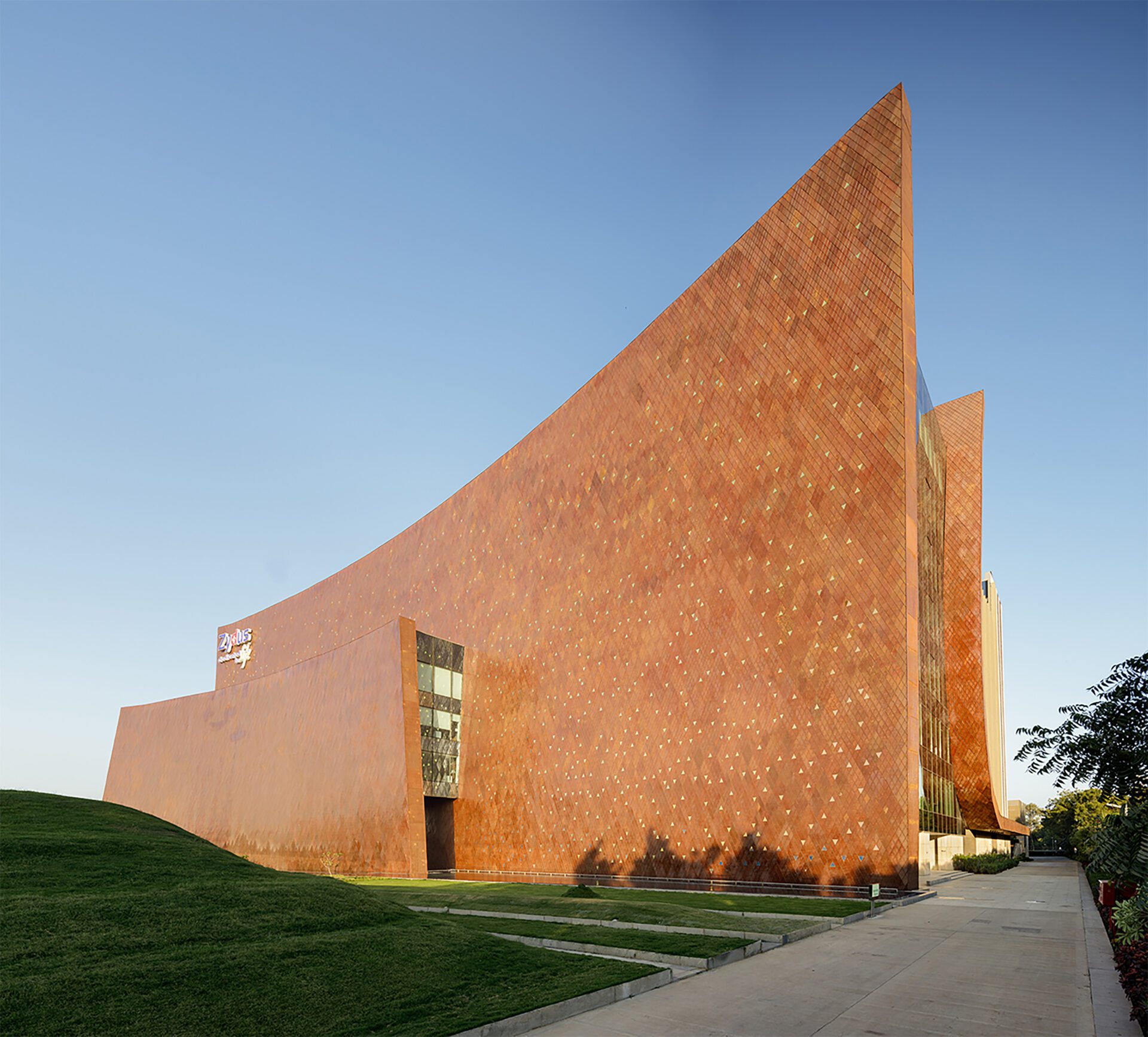
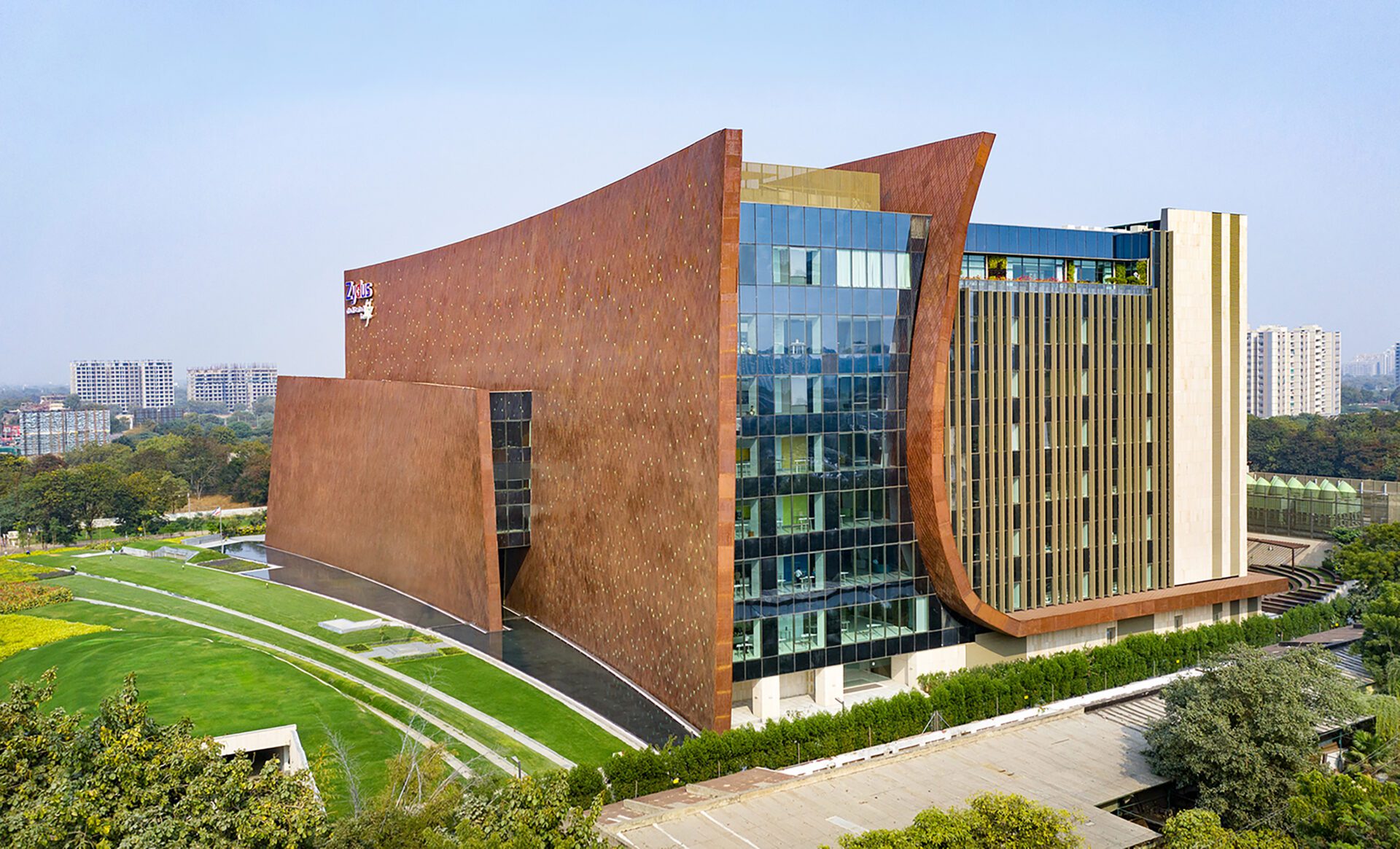
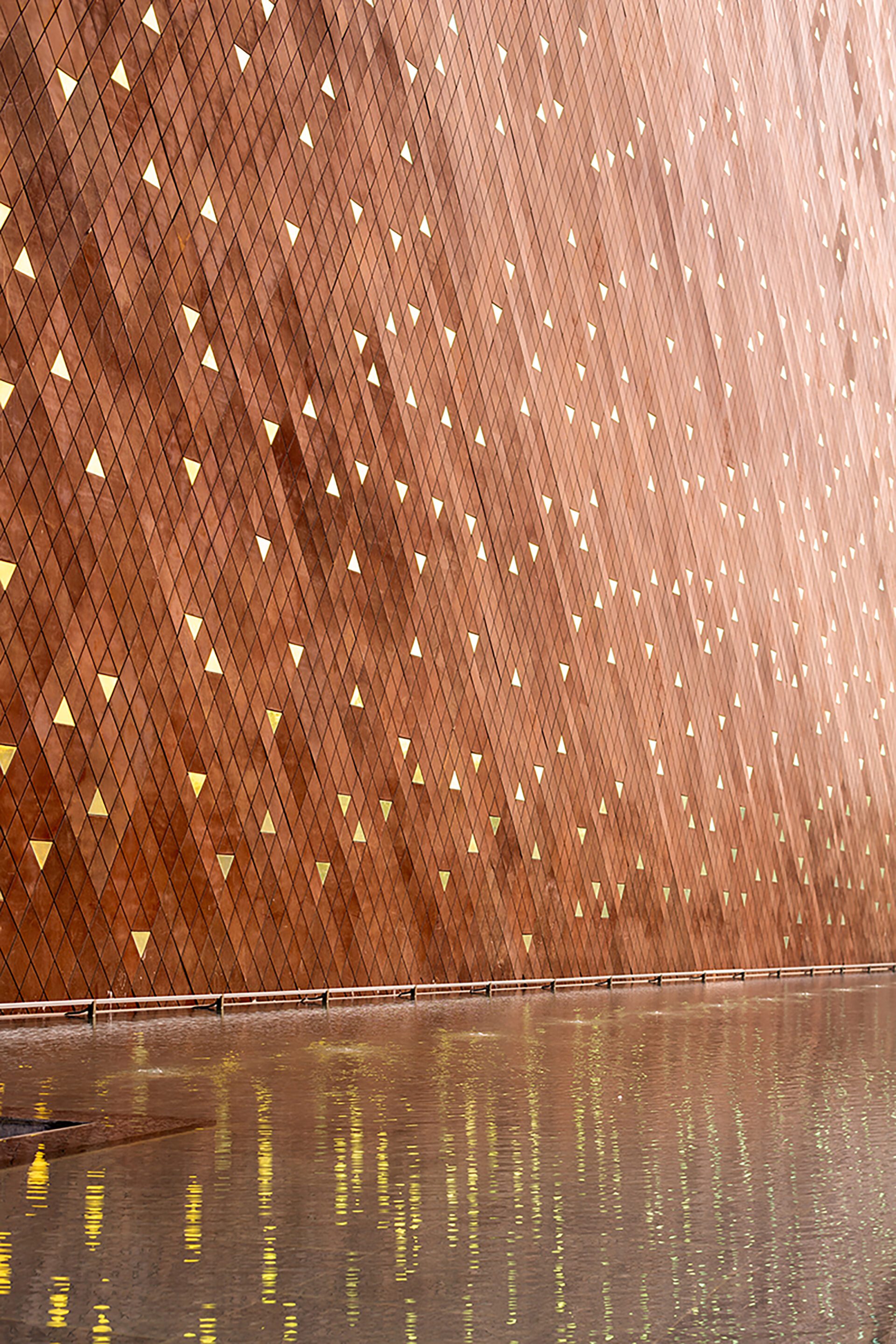
This region is replete with contextual references such as the mediaeval Bhadra and Pavagadh Fort, stepped courts of Adalaj and the iconic ‘Bhunga’ architecture of Kutch. Three large rampart-like walls form the western façade and shield occupants from the harsh temperatures of the highway (145°F). This microclimate screen is traditionally inspired in its conception and executed with contemporary bespoke detailing. These complex, curved steel surfaces refer to the tradition of metal work of the ‘Kansaras’ (vessel makers) that are age old masters of complex geometries. These were scaled up using computational programming. Corten steel is the primary material and the triangulated glass modules inserted within the walls are inspired by the mirrorwork of ‘Bhunga,’ Kutch structures that are architectural ornamentation and identity elements. These glass tubes have a dichroic finish that catches the sun's movement through the day & year, rendering the façade with perpetual dynamism.
Sustainable design | data-driven design:
Microclimate & Passive Design:
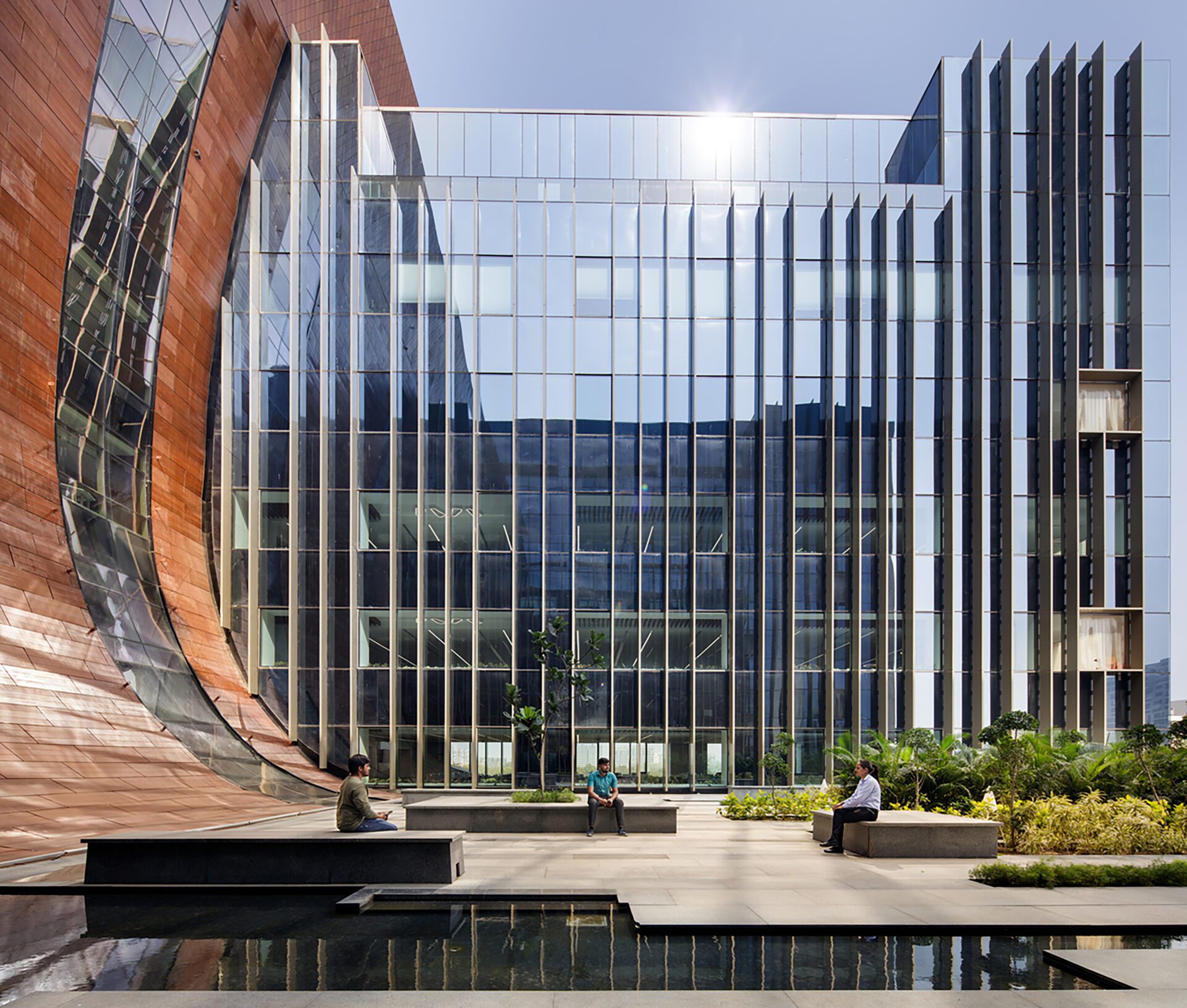
• Passive design strategies like solar shading, effectively located waterbodies, courtyards etc. have had a multi-fold impact by helping reduce the temperatures making the hot-dry outdoors comfortable and accessible for the occupants.
• Doubly Curved Microclimate Screen: The thermal barrier created on the West of the building banks the harsh solar heat experienced the from West. This helps in maintaining comfortable environment in the courts located on the East by a reduction of 5-6 0C in Perceptible Temperatures.
• Self-Shaded Courts: Self-shading courts keep the solar ingress out and control the temperature of internal spaces.
• EPI Achieved: 56 kWh/sq.m./yr, resulting in the building consuming up to 50% less energy than stipulated by the best Green Building standards.
Solar Control:
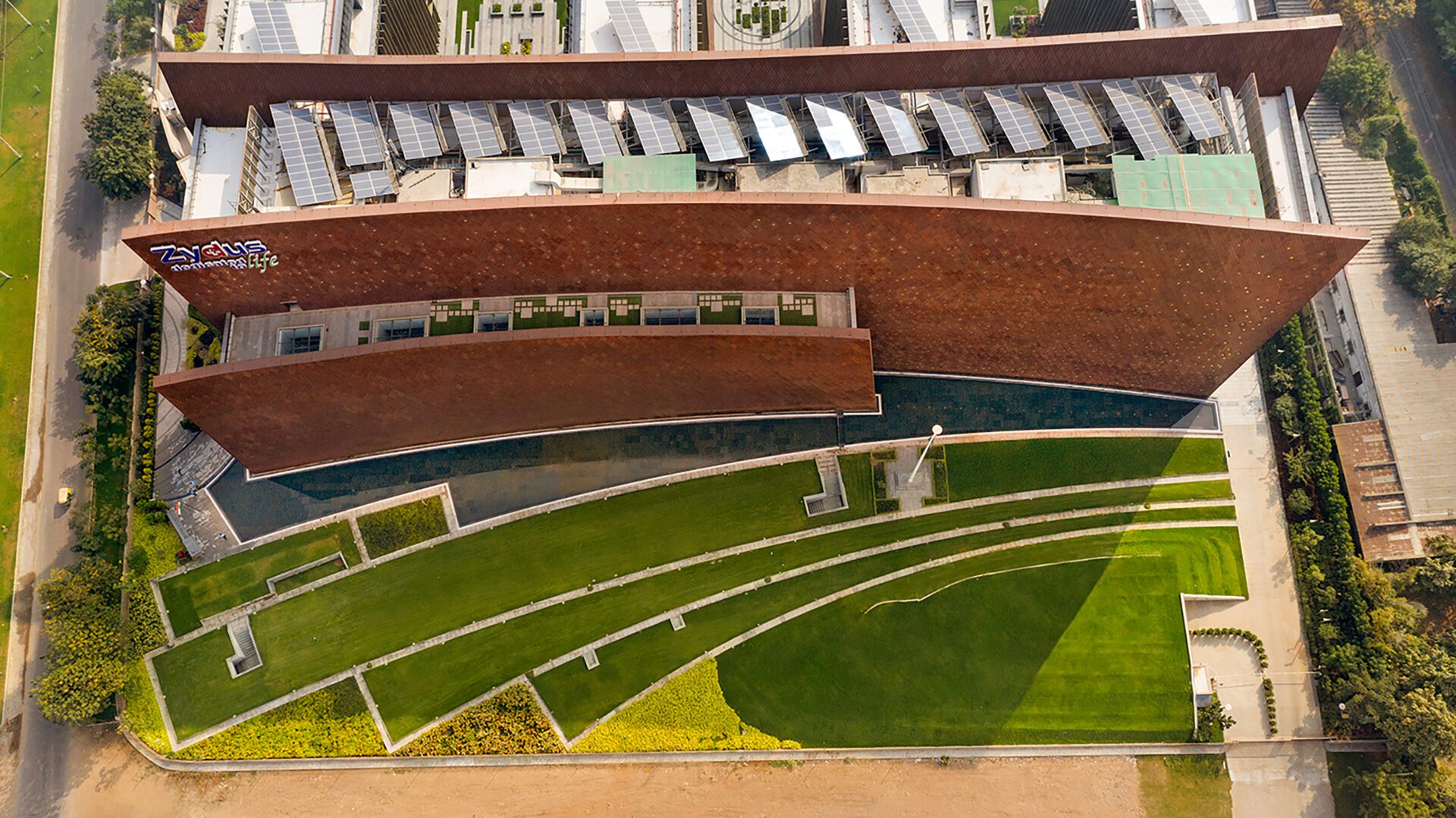
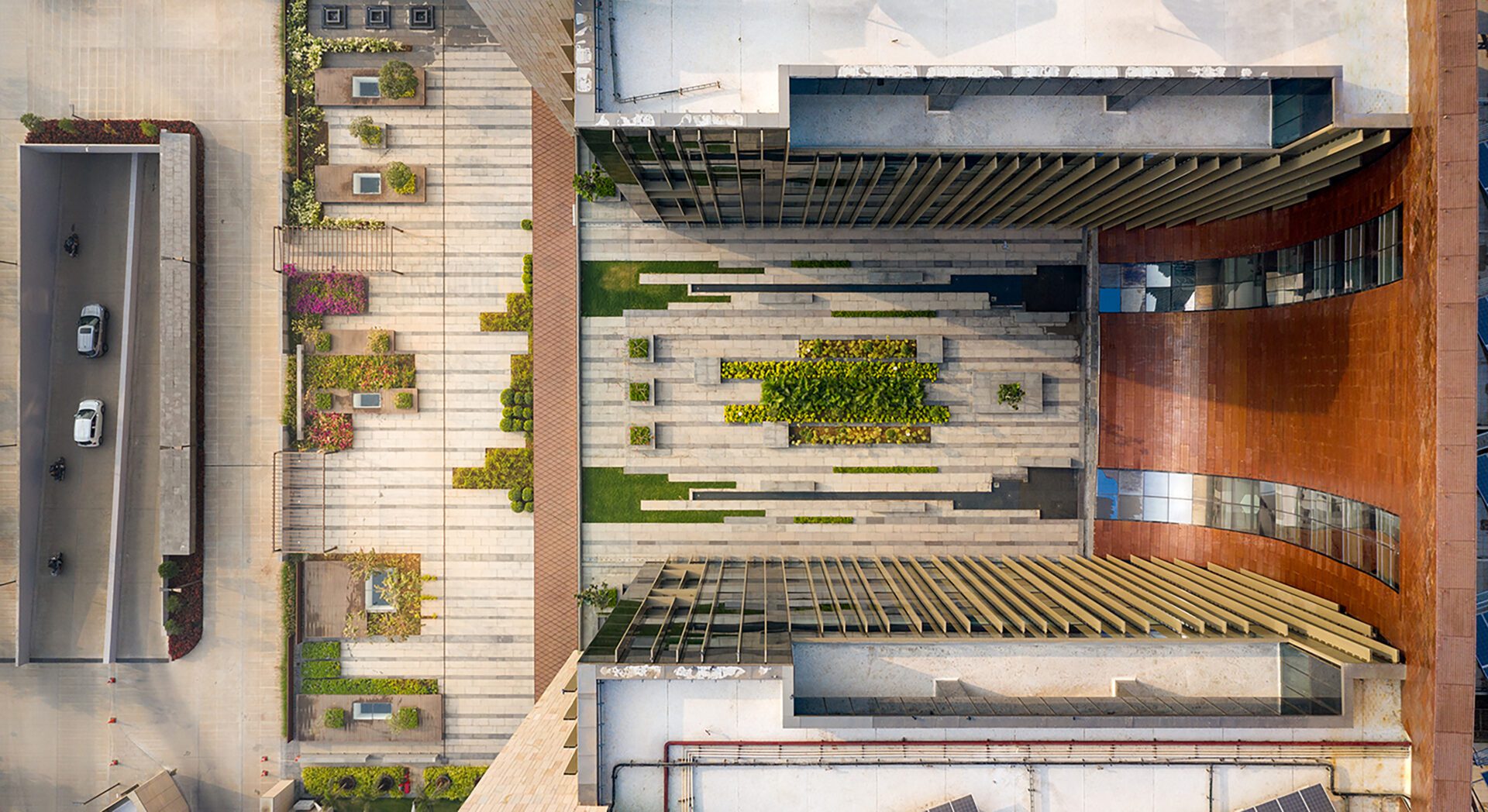
• The North-South orientation of the building reduces the solar heat gain from the harsh east-west sun, thereby significantly reducing the need for shading on the façade. Lower angles of the sun (morning and late afternoon) are further controlled using vertical fins on the south façade.
Target: Envelope Load ≤ 1.0W/sft | WWR : ≤40% Achieved: Envelope Load 1.0 W/sft | WWR : ≤ 30.8%
Net Zero Discharge:
The wastewater generated is reused after passing through the STP for cooling towers, irrigation & flushing which further forms a loop and results in zero discharge. The said STP uses MBR i.e., Membrane Bioreactor process for the treatment.
Visual Comfort:
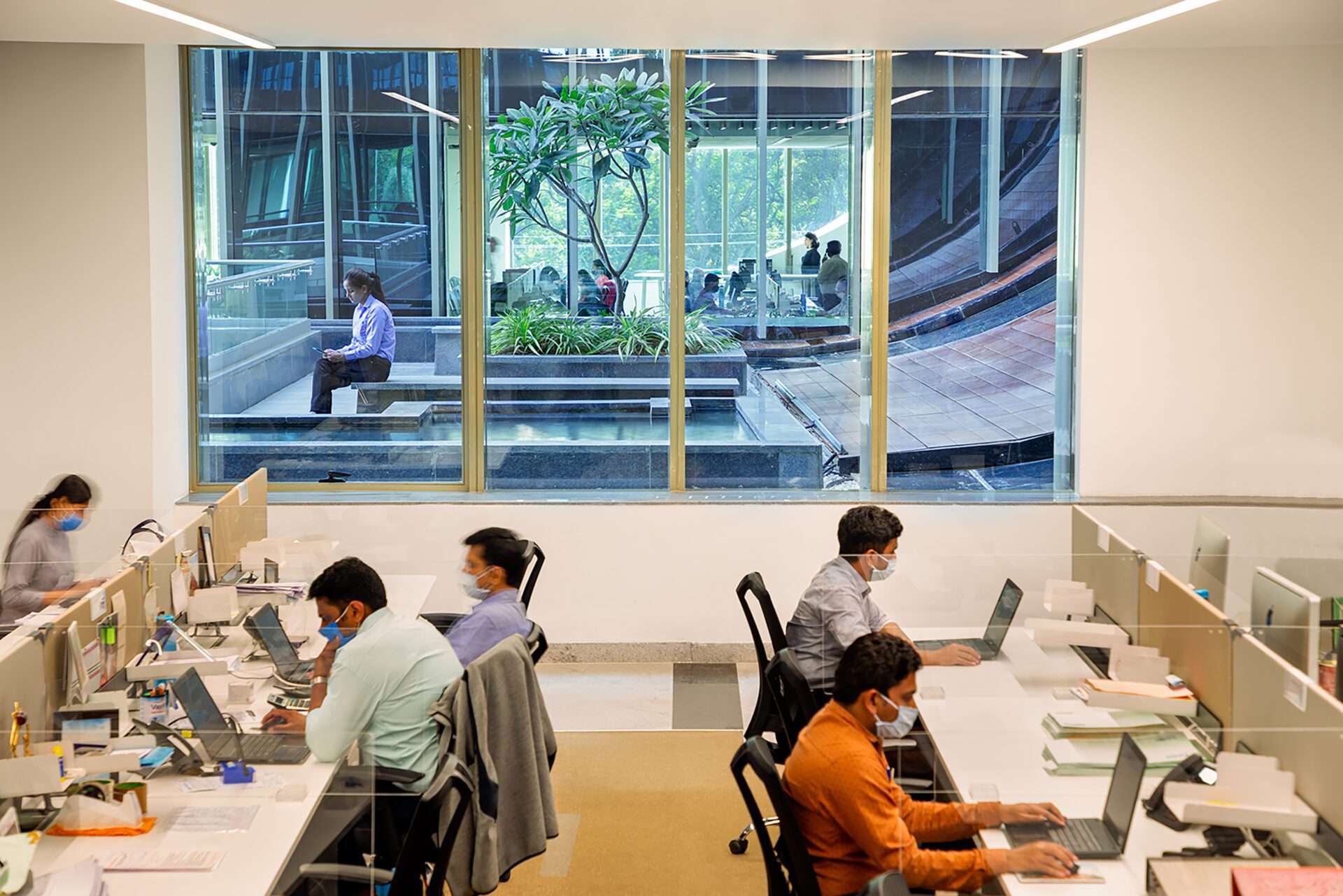
15M floorplate to ensure 100% glare-free, 100% day-lit, and blinds-free workplaces thereby eliminating the need for artificial lighting during the day.
The union of Old Knowledge and Precision
The architectural challenge was to marry the age-old knowledge of craftsmen who build by hand, to the precision required in the geometry of these walls represented by 14,200 data points and within $70 per sq.ft as the cost of the fully finished building. Other crafts such as in-situ terrazzo flooring, mould-cast cementitious pigmented tiles, hand turned metal furniture and installations formed a key part of the materiality of the project whilst supporting local economy & promoting local craft.
Human-Centric Spaces and Circulation
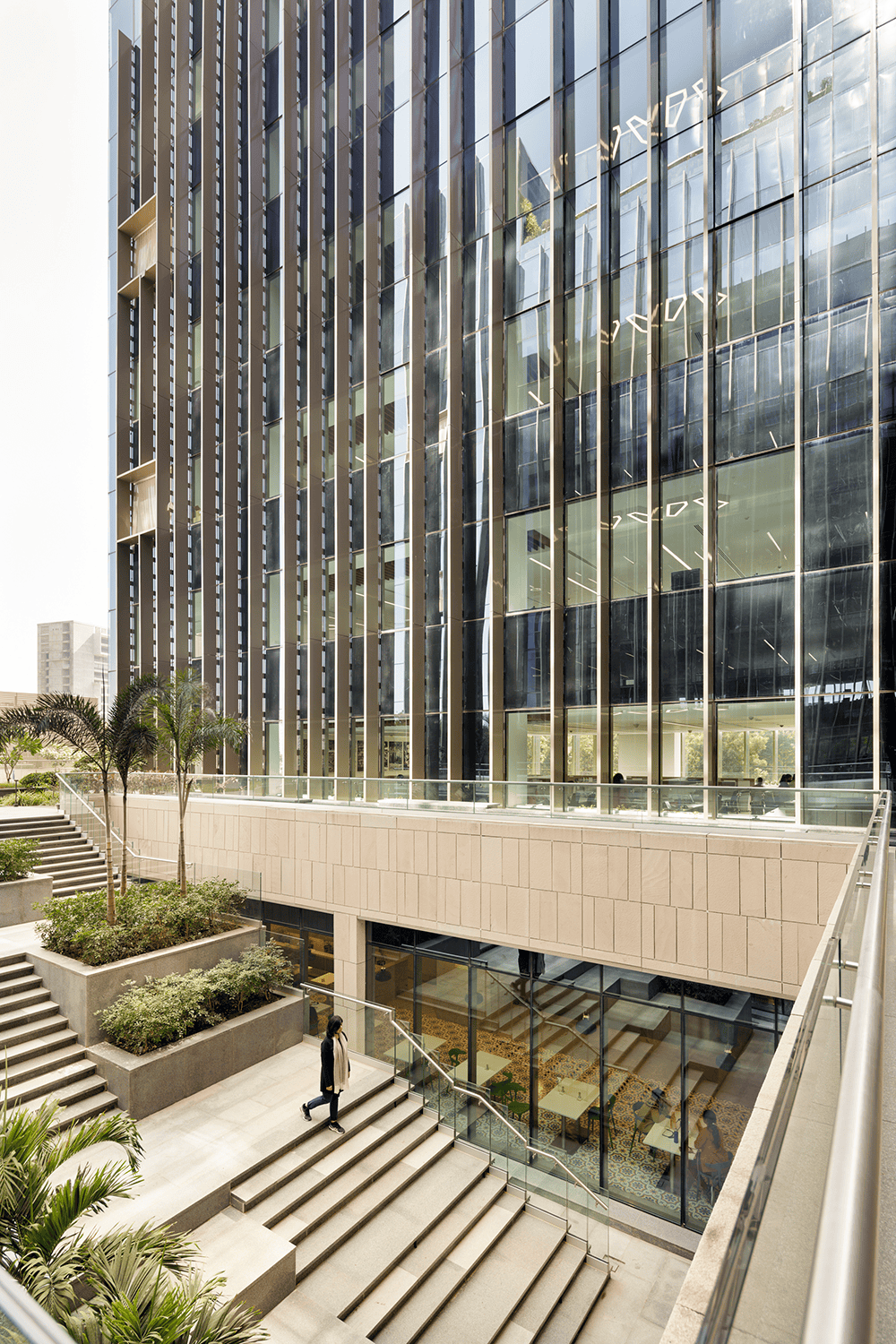
The design doesn't just focus on the interior but also incorporates the surrounding landscape. Circulation spaces in between the walls run from East to West, where all human engagement is concentrated. It consists of breakout spaces, alcove seating, bistros, employee engagement activity areas, setup for brainstorming and informal meetings. This spine connects all the formal work areas in a vertebral configuration. In today’s context, this zone also doubles up as a social distancing space to spread out the workforce.
The walls form an environmental shield creating a suitable microclimate behind them. The 47M by 125M walls house the entire social space for 2000 people and create an oasis for the north-south orientated office towers that sit behind. These towers are placed sufficiently apart to create shade in the stepped courtyards below, thereby encouraging outdoor use nearly all year round.
Conclusion
The design exemplifies the ideology of 'equity and transparency' in the workplace as an integral part of its architectural vocabulary, pays homage to local artisans and is contextually relevant.
Zydus Corporate Park stands as an epitome of tradition meeting modernity in architecture. It is contextually rich, architecturally innovative, and sustainable in its form, detail, and materiality. Its sustainability accomplishments in extreme environment are noteworthy and it is an ambassador of traditional crafts. It has offered a new dimension to local architectural and craft techniques.
Entry details